Many people don’t realize that choosing the right forklift is less about lifting capacity alone and more about how the machine interacts with space, load type, and workflow. This often leads to unexpected outcomes where the wrong equipment slows down operations instead of improving efficiency.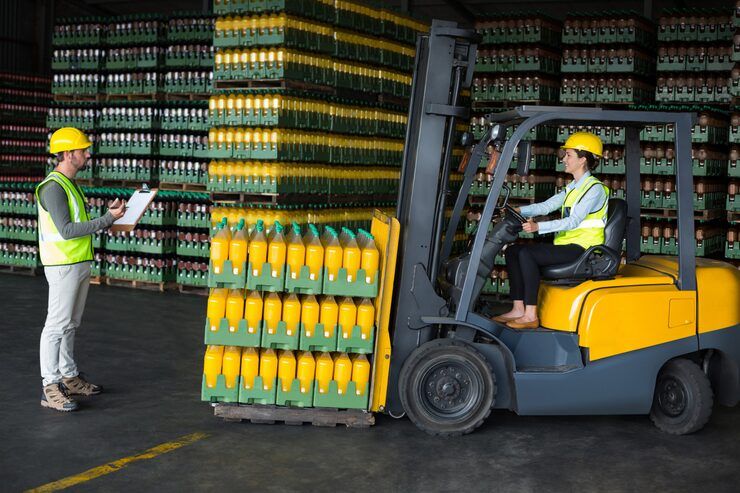
In this forklifts guide, you will explore how forklifts work, what types exist, and how their real-world usage varies depending on operational needs.
How Forklifts Work in Real Operations
Forklifts operate using a combination of hydraulic systems, counterweight balance, and controlled lifting mechanisms. While the concept seems simple lifting and transporting loads the underlying system involves precise coordination.
This matters because the efficiency of a forklift depends on how well its lifting mechanism, power source, and control system work together. Poor understanding of these elements can affect both performance and safety.
From a technical perspective, forklifts use hydraulic cylinders to raise loads vertically, while the counterweight stabilizes the machine during lifting. The operator controls movement, tilt, and lift height through a centralized system.
In real-world scenarios, warehouse forklifts operate in confined spaces, requiring precision, while outdoor forklifts handle uneven terrain and heavier loads. These differences highlight why understanding working principles is critical.
Types of Forklifts and Their Functional Differences
Different forklifts are designed to handle specific operational challenges, and selecting the right type depends on the working environment and load requirements.
Counterbalance Forklifts
These are the most common forklifts, using a rear counterweight to balance loads. They are widely used in warehouses and distribution centers.
Reach Trucks
Designed for narrow aisles, reach trucks extend their forks forward to access high storage racks. They are ideal for high-density storage environments.
Rough Terrain Forklifts
Built for outdoor use, these forklifts have large tires and strong suspension systems to handle uneven surfaces.
Pallet Jacks
Used for short-distance movement of palletized goods, pallet jacks are simple and efficient for low-lift operations.
Comparing Forklift Options for Different Work Environments
Choosing between forklift types depends on how operational conditions influence performance. Many assume that higher capacity always leads to better efficiency, but this is not always the case.
This matters because mismatched equipment can reduce productivity and increase operational complexity.
| Forklift Type | Best Environment | Key Strength | Limitation |
|---|---|---|---|
| Counterbalance | Warehouses | Versatile usage | Requires more space |
| Reach Truck | Narrow aisles | High stacking ability | Limited outdoor use |
| Rough Terrain | Outdoor sites | Handles uneven ground | Less precise indoors |
| Pallet Jack | Short distances | Simple operation | Limited lifting height |
From a practical perspective, the right choice depends on space constraints, load type, and frequency of use. One overlooked factor is how maneuverability affects workflow speed, especially in confined environments.
Real-World Applications and Operational Behavior
Forklifts behave differently depending on how they are used in real-world operations. The same machine can perform efficiently in one environment but struggle in another.
This matters because actual usage conditions such as layout, load variation, and operational frequency determine overall performance.
For example, in large warehouses, reach trucks optimize vertical storage by accessing high racks. In contrast, construction sites rely on rough terrain forklifts to transport materials across uneven ground.
From a system perspective, forklift usage involves coordination between operators, load handling, and workflow timing. If any of these elements are misaligned, efficiency can drop.
This is where many operations face challenges performance depends not just on the machine but on how it is integrated into the workflow.
Key Performance Factors That Influence Efficiency
The performance of forklifts depends on multiple operational factors, and understanding these can improve both productivity and safety.
This matters because small inefficiencies can compound over time, affecting overall operations.
Key performance factors:
- Load capacity and weight distribution
- Maneuverability in confined spaces
- Power source (electric vs fuel-based)
- Operator skill and control
For instance, electric forklifts are often used indoors due to lower emissions and quieter operation, while fuel-based forklifts handle heavier outdoor tasks.
One overlooked factor is how operator training impacts efficiency. Even advanced forklifts can underperform if not used correctly.
Current Trends in Forklift Technology and Usage
Forklifts are evolving with advancements in automation, energy efficiency, and digital integration. Modern systems aim to improve both performance and operational visibility.
This matters because technology is reshaping how material handling is managed across industries.
Currently, electric forklifts are gaining popularity due to efficiency and reduced environmental impact. At the same time, automated guided vehicles (AGVs) are being introduced for repetitive tasks.
Another trend is the use of telematics systems, which provide real-time data on usage, maintenance, and performance.
In real-world operations, these innovations are helping reduce downtime and improve decision-making, especially in large-scale logistics environments.
Future Direction of Forklift Systems
Forklifts are expected to become more intelligent and adaptive as technology continues to evolve. The focus is shifting toward automation and data-driven operations.
This matters because future systems will aim to reduce manual intervention and improve efficiency through smart coordination.
From a system perspective, integration with warehouse management systems and AI-based optimization may become standard.
For example, forklifts may automatically adjust routes based on workflow demands, improving operational efficiency.
As these changes unfold, the role of forklifts will expand beyond simple lifting to becoming part of a connected logistics ecosystem.
FAQ
1. What are forklifts used for?
Forklifts are used to lift, transport, and organize materials in industrial and warehouse environments.
2. What are the main types of forklifts?
Common types include counterbalance forklifts, reach trucks, rough terrain forklifts, and pallet jacks.
3. How do forklifts work?
They use hydraulic systems and counterweight balance to lift and move loads.
4. What factors affect forklift performance?
Load capacity, maneuverability, power source, and operator skill influence performance.
5. What trends are shaping forklift technology?
Automation, electric systems, and real-time data integration are key trends.
Conclusion
This forklifts guide highlights how forklifts function beyond simple lifting machines, emphasizing their role in improving operational efficiency and workflow management. From different types to real-world applications, each aspect influences how effectively materials are handled.
Many people don’t realize that forklift performance depends more on how well the machine fits the environment than on its specifications alone. This often leads to differences that become clear only during actual use.
As forklift systems continue to evolve, exploring how different types and technologies interact with real-world operations can provide deeper insights into optimizing material handling processes.