Many people don’t realize that remodeling decisions are not just about design they directly impact how a home functions daily. This often leads to unexpected outcomes where visually appealing changes may reduce usability or increase maintenance complexity.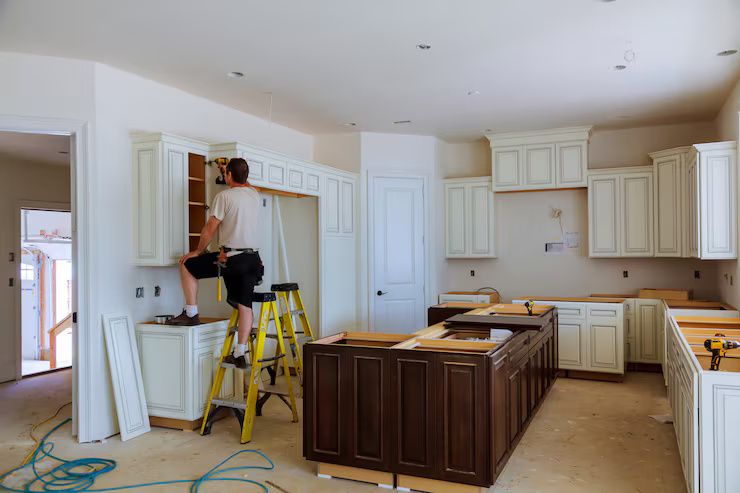
In this guide, you will explore how to approach home remodeling strategically, what factors influence results, and how to make decisions that balance design, performance, and long-term usability.
Understanding How Home Remodeling Actually Works
Home remodeling involves modifying existing structures to improve functionality, layout, or appearance. However, the process is not only about replacing or upgrading elements it is about how different parts of a home interact.
This matters because changes in one area can affect other systems such as ventilation, lighting, or space utilization. A decision made without considering these interactions can create inefficiencies.
From a practical perspective, remodeling includes planning layout changes, selecting materials, and aligning design with structural constraints. These steps must work together rather than independently.
In real-world scenarios, a kitchen remodel that improves storage but reduces movement space can affect daily usability. This highlights how remodeling is not just about adding features but optimizing overall flow.
Types of Home Remodeling Approaches
Different remodeling approaches serve different goals, and selecting the right type helps align expectations with actual results.
Cosmetic Remodeling
This includes surface-level updates such as painting, flooring, or fixtures. It improves appearance but does not significantly change functionality.
Structural Remodeling
This involves modifying walls, layouts, or core elements. It can improve space efficiency but requires careful planning.
Functional Remodeling
Focused on usability, this approach improves how spaces are used, such as optimizing storage or workflow.
Complete Renovation
A full transformation that combines multiple changes across the home. It offers flexibility but requires coordinated planning.
Smart Planning Decisions (Where Most Mistakes Happen)
Planning is the most critical stage in home remodeling, yet it is also where most mistakes occur. Many decisions are made based on appearance rather than long-term usability.
This matters because incorrect planning can lead to repeated adjustments and inefficiencies after completion.
Key planning considerations:
- Space utilization and movement flow
- Alignment between design and daily usage
- Material compatibility and durability
- Future adaptability of the space
For example, choosing between open layouts and segmented spaces depends on lifestyle. Open layouts improve visibility but may reduce privacy, while segmented layouts provide separation but limit flexibility.
This is where decision tension appears the right choice depends on how the space is actually used, not just how it looks.
Real-World Remodeling Scenarios and Practical Insights
Home remodeling behaves differently in real-world conditions compared to design expectations. What works in theory may not perform the same in daily use.
This matters because real-world usage includes factors such as wear, maintenance, and adaptability.
From a system perspective, remodeling affects lighting distribution, airflow, and movement patterns. These elements influence overall comfort.
For instance, adding larger windows may improve natural light but also increase heat exposure depending on orientation. Similarly, upgrading materials without considering maintenance can create long-term challenges.
These scenarios show that remodeling decisions must balance immediate improvement with ongoing usability.
Performance Impact of Remodeling Choices
Remodeling decisions directly influence how efficiently a home functions over time. Performance is not just about durability but also about how well different elements work together.
This matters because poor performance can reduce comfort and increase maintenance effort.
From a practical angle, performance depends on factors such as material selection, layout efficiency, and system integration.
Key performance factors:
- Durability of materials
- Ease of maintenance
- Efficiency of space usage
- Adaptability to changing needs
For example, selecting materials that require minimal maintenance can improve long-term usability. On the other hand, choosing visually appealing but delicate materials may create ongoing effort.
One overlooked factor is how easily a space can adapt to future needs, which often determines long-term satisfaction.
Current Trends in Home Remodeling
Home remodeling trends are shifting toward functionality, flexibility, and sustainability. Homeowners are focusing more on how spaces perform rather than just how they look.
This matters because modern remodeling decisions are influenced by long-term usability and efficiency.
Currently, there is a growing preference for multi-functional spaces where a single area can serve multiple purposes. This improves space utilization, especially in compact homes.
Another trend is the use of materials that support durability and reduced maintenance. This aligns with the need for practical and efficient living environments.
In real-world applications, these trends reflect a shift toward smarter planning rather than purely aesthetic upgrades.
Future Direction of Home Remodeling
Home remodeling is expected to evolve toward more adaptive and technology-driven solutions. Future designs may focus on flexibility and integration.
This matters because homes are increasingly required to support changing lifestyles and needs.
From a system perspective, remodeling may include modular layouts, smart integration, and customizable spaces.
For example, adaptable storage systems and flexible room designs allow spaces to change function over time. This improves long-term usability without requiring frequent modifications.
These developments suggest that remodeling will continue to move toward efficiency, adaptability, and user-focused design.
FAQ
1. What are tips for home remodeling?
They are strategies that help improve planning, design, and execution of remodeling projects.
2. What is the most important part of remodeling?
Planning is the most critical stage as it determines the overall outcome.
3. What types of remodeling are available?
Cosmetic, structural, functional, and complete renovation approaches are common.
4. How do I avoid remodeling mistakes?
Focus on real-world usage, not just design appearance.
5. What trends are shaping remodeling today?
Flexibility, multi-functional spaces, and durable materials are key trends.
Conclusion
Tips for home remodeling go beyond design ideas they shape how a home functions and adapts over time. The right approach depends on aligning planning decisions with real-world usage rather than visual appeal alone.
Many people don’t realize that small choices in layout, materials, and structure can significantly influence long-term comfort and efficiency. This often leads to differences that only become visible after daily use.
As remodeling continues to evolve, exploring different approaches with a focus on usability, adaptability, and performance can reveal possibilities that are not immediately obvious.